
 WhatsApp
Very professional with great knowledge of the law
Antonio is an excellent lawyer , very professional with great knowledge of the law. Thank you Antonio!! - Pavel P.

Criminal Law

DUI

Personal Injury

Arrested, under investigation, or facing criminal charges in Miami-Dade County? Valiente Law defends people accused of misdemeanors, felonies, DUI, and federal crimes. We review the evidence, explain your options, and prepare a defense based on the facts of your case.
Attorney Antonio F. Valiente brings experience from the Miami-Dade Public Defender’s Office and felony jury trials. Our team provides personal attention and communication in English and Spanish throughout the criminal case.





A criminal accusation can affect your freedom, work, family and immigration status. If you were arrested, received a notice to appear or learned that you are under investigation in Miami-Dade County, the next decisions matter. You should understand the charge, the evidence and the deadlines before deciding what to do.
Valiente Law represents people accused of state criminal offenses in Miami-Dade County, including misdemeanors, felonies, theft, criminal mischief, resisting without violence and DUI. Attorney Antonio F. Valiente brings experience from the Miami-Dade Public Defender’s Office and felony jury trials. The firm provides direct communication in English and Spanish.
Call 305.764.5460 or request a free, confidential consultation. Se Habla Español.
Explore media coverage of Valiente Law and our work representing clients and protecting their rights.





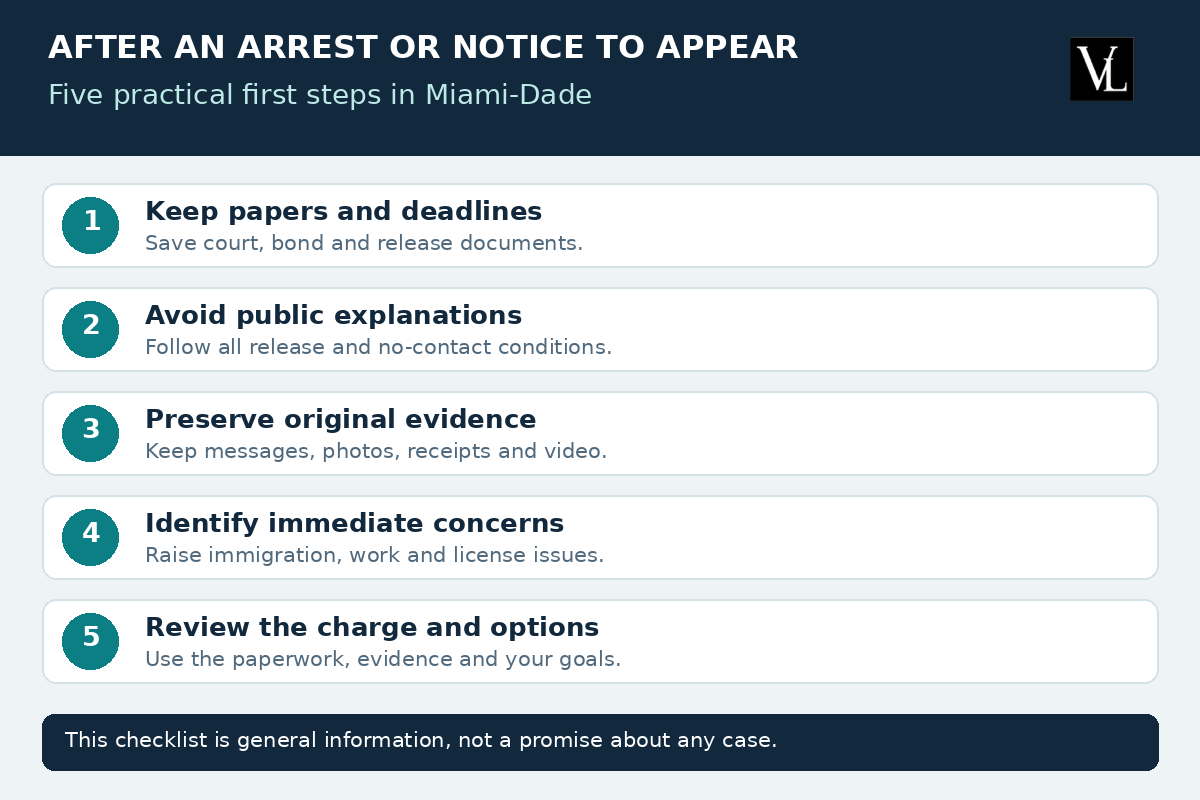
Every case is different, but a few practical steps can help protect information that may be important to your defense:
The label on an arrest report is the beginning of the analysis, not the end. The prosecution still must prove the required elements with admissible evidence. The available defense and resolution options depend on the facts, the statute, the evidence and the person’s history.
A misdemeanor can still carry jail exposure, probation, financial obligations and lasting record consequences. First-time defendants should not assume that diversion, dismissal or a withhold of adjudication is automatic. Read our Miami misdemeanor defense guide for the court process and common charges.
The value and type of property, alleged conduct, statements, store records and prior history can affect a theft case. Our focused resources explain Miami theft charges and petit theft and shoplifting, including first-offense and noncitizen concerns.
A criminal-mischief case can turn on identity, intent, ownership, the cause of the damage and a supported damage amount. See our guide to criminal mischief and vandalism charges in Miami-Dade.
A resisting-without-violence charge requires careful review of what the officer was doing, what the person knew and what conduct allegedly obstructed the officer. Read about resisting an officer without violence in Florida.
A DUI defense review may involve the stop, field observations, testing, video, statements and separate driver-license deadlines. See our Miami DUI defense overview and first DUI charge guide.
For the complete service map, visit criminal charges we defend in Miami-Dade.
A first arrest does not answer what will happen. It can be relevant to negotiations or program eligibility, but the evidence should still be reviewed and no outcome is guaranteed. Before accepting any program, ask about admissions, required conditions, costs, deadlines, what happens after successful completion and what happens if a condition is not completed.
For a person who is not a U.S. citizen, the Florida label alone does not determine immigration consequences. A misdemeanor, a withhold of adjudication or a diversion agreement can still require a federal immigration analysis. Tell criminal defense counsel about your status before entering a plea, making an admission or signing program paperwork. Criminal and immigration counsel should coordinate when appropriate.
A dismissal also does not automatically erase every public record. Eligibility for sealing or expungement depends on the case history and the governing rules. Learn more about sealing or expunging a Miami criminal record.
A useful first review starts with the actual paperwork and a timeline, not assumptions based on the charge name. Bring the documents you received and identify upcoming court dates. Tell counsel where videos, messages, witnesses or receipts may exist, especially if a recording could be overwritten.
These are review questions, not promises of a dismissal or any particular result. The strategy should be based on the available facts and the law that applies to the alleged incident.
You can ask for a lawyer before answering questions about the accusation. A person may want to correct the story immediately, but an incomplete or misunderstood statement can become evidence. Get advice based on the situation before giving a detailed account.
A notice to appear can require a court appearance without continued physical custody. It is still connected to a criminal charge and should not be ignored. Keep the document, calendar the date and have the exact charge reviewed.
Florida criminal procedure generally requires a first appearance within 24 hours after arrest. The judge addresses subjects that can include counsel and pretrial release. Some defendants may be released under other lawful procedures before that hearing, and particular charges can have special rules. The current rule and the facts of the arrest control.
Possibly, but not automatically. Eligibility and results depend on the charge, evidence, history, prosecutor, written program rules and completion of all conditions. Review the evidence and the proposed terms before making admissions or accepting a program.
The Miami-Dade Clerk provides an online criminal case and calendar search. The Clerk states that online access is not the official court record, so important dates and documents should be confirmed through the appropriate official source and with counsel.
Bring the arrest or notice-to-appear paperwork, court dates, bond and release conditions, and the names or locations of possible evidence. Also mention prior cases and immigration, employment, licensing or driving concerns. Do not alter evidence or violate a no-contact order to obtain information.
If you are facing a state criminal accusation in Miami-Dade County, Valiente Law can review the charge, the available evidence and the next deadlines with you. No website can determine the result of a specific case, but an early review can identify the decisions that need attention.
Call 305.764.5460 or contact Valiente Law for a free, confidential consultation. Se Habla Español.